Everglades Python Huntress Returns: Amy Siewe on Florida’s Invasive Snake Crisis
The Python Huntress on Florida’s Everglades Crisis and Why Experience Matters
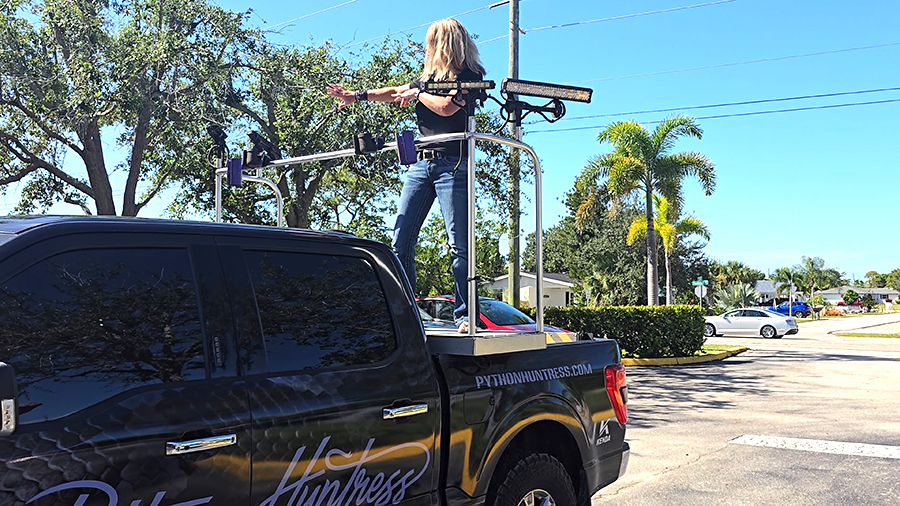
Burmese pythons have become one of the most serious invasive species threats facing Florida, with the Everglades at the center of the problem. What began as an isolated issue has grown into a long-term ecological challenge that impacts wildlife, public perception, and safety. In this Farm Truck Financial episode, Eric Kearney welcomes back Amy Siewe, widely known as the Python Huntress, to explain how the problem evolved and what people need to understand before they underestimate it.
The conversation goes far beyond shocking headlines and viral videos, focusing instead on education, real-world experience, and the long-term outlook for Florida’s ecosystem.
How the Burmese Python Problem Took Hold in Florida
Amy explains that while many people assume released pets are the main cause, the rapid expansion of Burmese pythons traces back to larger events that allowed breeding populations to establish themselves in South Florida. Once embedded in the Everglades, the snakes thrived in an environment that provides cover, warmth, and a steady food supply.
The scale of the Everglades makes detection and removal extremely difficult, allowing the population to grow quietly over time.
Why This Is an Ecological Problem Without a Quick Fix
Eric compares the situation to long-term financial planning. While retirement planning allows for modeling different scenarios, invasive species management involves constant uncertainty. Amy explains that any solution must avoid harming native wildlife and the surrounding ecosystem, which severely limits the tools available.
As a result, progress is slow and often measured one snake at a time rather than through sweeping solutions.
What People Get Wrong About Catching Pythons
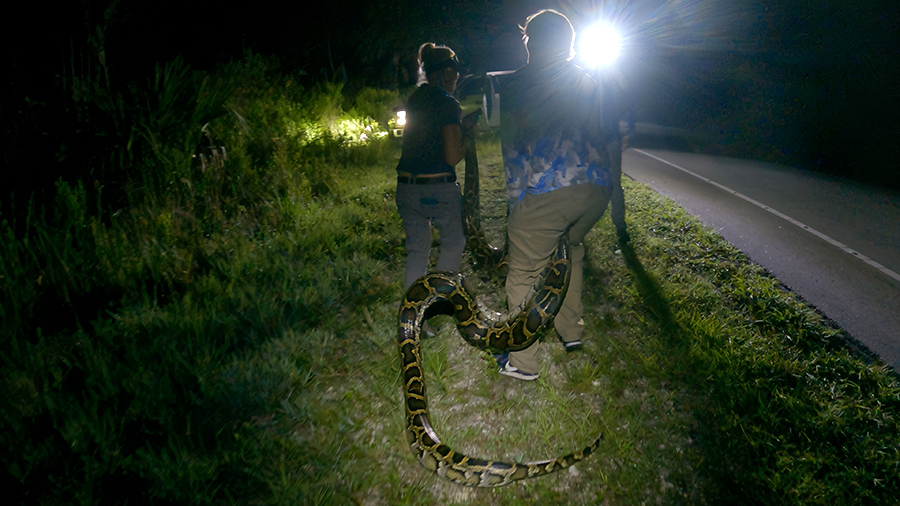
Online videos often make python hunting look simple and fast. Amy describes a very different reality. Locating and safely capturing a single python can take many hours, and success depends on experience, patience, and proper technique.
Controlling the head is critical, and mistakes can escalate quickly. What looks easy on camera often leaves out failed attempts, close calls, and the physical demands involved.
When Inexperience Creates Bigger Problems
Amy shares stories of encountering people who attempted to catch pythons without understanding the risks or legal requirements. In some cases, snakes were nearly released back into the environment simply because the person did not know what to do next.
These situations not only put people at risk but also interfere with professional removal efforts that are focused on reducing the population responsibly.
Education Over Fear
One of the most important takeaways from the conversation is that fear is not the answer. Pythons do not see humans as prey, but they are powerful constrictors with teeth capable of causing serious injury when mishandled.
Amy emphasizes that education helps people replace fear with awareness, allowing them to respect the environment without panic or reckless behavior.
What Guided Hunts Really Teach People
Through guided hunts, Amy shows participants what professional python removal actually involves. Many arrive confident and leave humbled, gaining a new respect for both the animal and the Everglades itself.
The experience reinforces why training, preparation, and experience matter when dealing with wildlife in such a complex environment.
Looking Ahead at a Long-Term Challenge
The Burmese python issue is not going away overnight. Amy explains that progress depends on continued education, professional involvement, and realistic expectations about what can be controlled.
Like building a retirement plan, addressing this problem requires patience, consistency, and a long-term mindset rather than quick reactions.